
Dallas asks a lot of an HVAC system: summers that regularly push past 100°F, winters with the occasional hard freeze, and a housing stock that ranges from century-old bungalows in Lakewood to new construction pushing north toward the suburbs. A conventional gas furnace and air-source AC unit handles that swing by working harder against whatever the outside air is doing. A geothermal system sidesteps the problem entirely by exchanging heat with the ground instead — and the two approaches end up looking pretty different once you put them side by side.
Dallas HVAC Comparison Guide
Geothermal vs. Traditional HVAC Systems in Dallas
Dallas asks a lot of an HVAC system: summers past 100°F, occasional hard freezes, and housing from century-old bungalows to new construction. Here is how the two approaches actually compare.
How Each System Actually Works
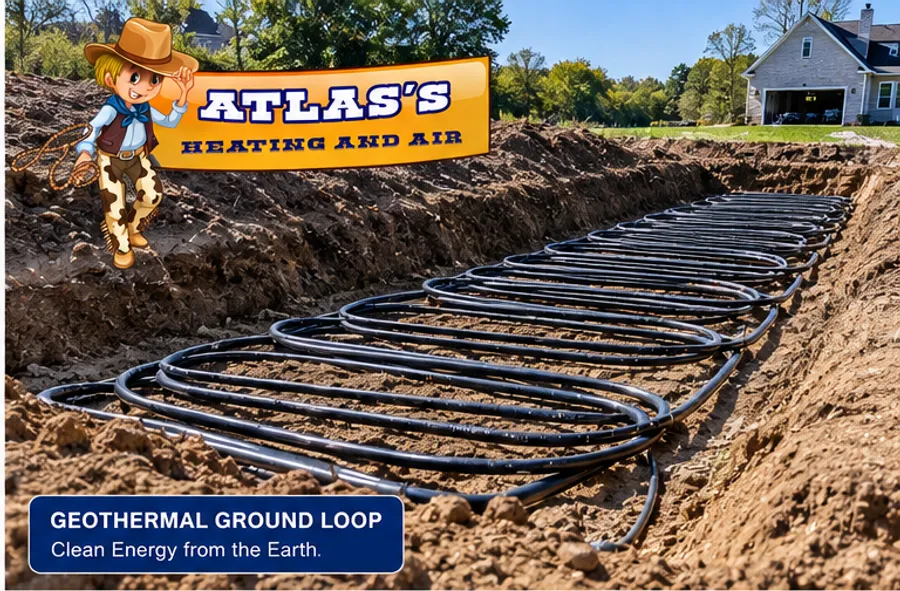
A traditional split system burns gas (or uses an electric resistance/heat pump cycle) to heat air and uses a refrigerant cycle to cool it, both processes fighting whatever temperature it is outside that day. A geothermal system circulates fluid through a buried loop that exchanges heat with the earth, which sits at a stable mid-60s temperature year-round in North Texas regardless of whether it's August or January. In winter, the system pulls that stored heat into the building; in summer, it reverses and sends heat back into the ground.
Head to Head
Side by Side
| Feature | Geothermal | Traditional HVAC |
|---|---|---|
| Efficiency | 300–500% (COP of 3–5); moves existing heat rather than generating it. EPA: 25–50% less electricity than conventional. | 95–98% AFUE max for gas furnaces — can never exceed 100% of the energy consumed. |
| Lifespan — Indoor | 20–25 years | 10–15 years before major components need replacing |
| Lifespan — Ground Loop | 50+ years — outlasts most other components in a home | N/A (no ground loop) |
| Noise & Footprint | All equipment indoors and underground. Nothing outside beyond the buried loop. | Outdoor condenser takes up yard space and adds noise near patios, windows, and property lines. |
| Upfront Cost | Higher — loop field installation adds to the initial price. | Lower initial cost. |
| Long-term Cost | Efficiency gap closes the upfront difference over time through lower utility bills. | Higher ongoing energy costs year after year. |
| Environmental Impact | No on-site combustion emissions. Draws only electricity for pump, fan, and compressor. | Gas furnace burns fossil fuel on-site. |
Which One Makes Sense Depends on the Property
Geothermal isn't automatically the right call for every Dallas-area property. A home with a small, heavily built-out lot in an area like the Design District's residential edges may have less room for a horizontal loop field (though vertical drilling is often still an option). A larger lot in Preston Hollow or a newer development near the Sam Rayburn Tollway corridor typically has more flexibility. That's why the honest starting point for anyone comparing the two is a site assessment rather than a generic answer.
Talk to Someone Who'll Give You a Straight Answer
We install and service both geothermal and traditional HVAC systems, so we're not trying to talk every caller into a geothermal conversion. If your property and budget make more sense for a traditional system, we'll tell you that directly.
Free estimates and consultations
All major brands serviced
Licensed and experienced technicians