Tarrant County Geothermal Specialists

Geothermal Heating & Cooling for Fort Worth, TX Homes

Efficient, quiet comfort designed for every kind of Fort Worth home — from historic bungalows near TCU to new builds at Alliance.

Geothermal heating and cooling service for a Fort Worth home

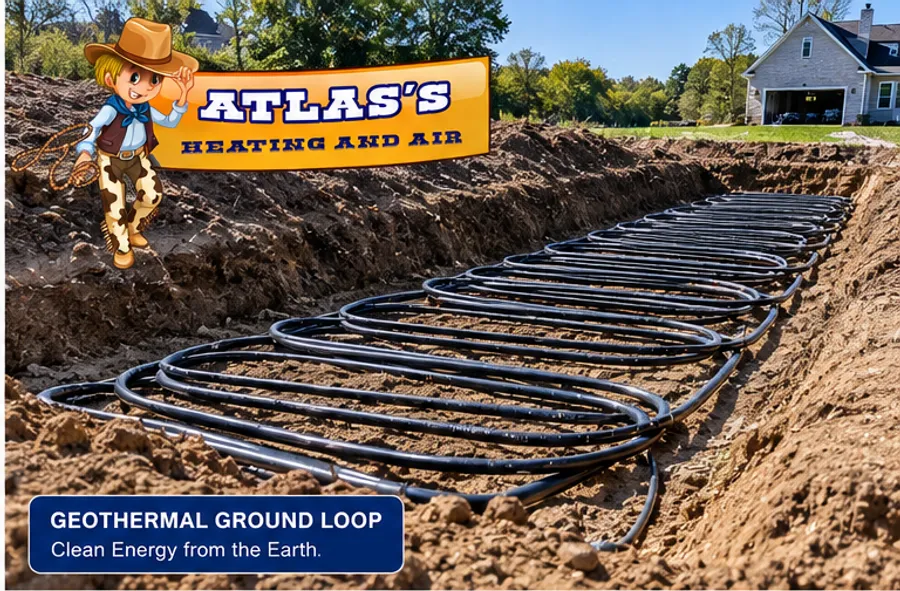
Fort Worth is a big, varied city — a historic downtown built around Sundance Square, the cattle-drive charm of the Stockyards, the museums of the Cultural District, and newer growth stretching from Clearfork in the southwest to Alliance in the north. That range means Fort Worth homes come in every shape and vintage, from century-old bungalows near TCU to new construction along the I-35W North corridor. Atlas Geothermal designs, installs, and services residential ground-source heat pump systems throughout Fort Worth, using a closed loop to pull heat from the earth in winter and send it back into the ground come August.

Geothermal ground loop installation diagram for Fort Worth TX homes by Atlas Heating and Air

Local Expertise Across a Big City

We plan every Fort Worth installation around the roads and neighborhoods that actually shape this city. Interstate 35W runs north–south through the middle of town, connecting downtown to the growing Alliance corridor to the north. Interstate 30 cuts east–west through downtown, Interstate 820 (the Jim Wright Freeway) loops around the city as its beltway, and the Chisholm Trail Parkway runs southwest from downtown near TCU out toward Benbrook and Cleburne. US 287 and US 377 thread through as well, with US 377 running straight through the central business district.

We've worked on homes near Downtown Fort Worth and Sundance Square, in the Cultural District around the Kimbell and Amon Carter museums and Will Rogers Memorial Center, and in the historic Stockyards area near North Main Street. We've assessed lots around TCU and the Westcliff and Fairmount neighborhoods, in the Camp Bowie and West 7th corridors, and in newer construction at Clearfork along the Trinity River in southwest Fort Worth. On the north side, we've serviced homes in the fast-growing Alliance area off I-35W, near Alliance Town Center and the Texas Motor Speedway corridor. That range — old bungalows on shaded lots near downtown, mid-century homes in neighborhoods like Wedgwood and Tanglewood, and brand-new builds out toward Alliance — means loop field design really does depend on where in Fort Worth a home sits.
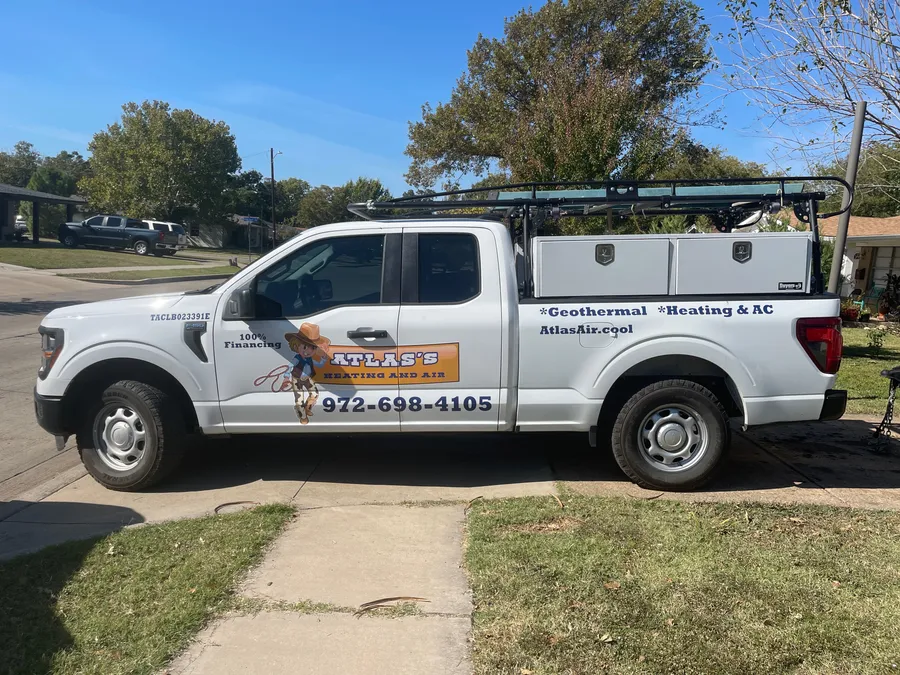
Atlas Heating and Air service truck serving Fort Worth and Tarrant County

Serving Fort Worth homes from Sundance Square to Alliance and everywhere in between.

Built for Fort Worth's Soil and Climate

A geothermal system circulates fluid through a buried loop that exchanges heat with the ground instead of the outside air, so it isn't fighting a Texas summer or a hard winter freeze the way a conventional air-source system does — it's exchanging heat with stable, mid-60s ground temperature instead. The EPA has found that geothermal heat pumps typically use 25–50% less electricity than conventional heating and cooling systems. Fort Worth sits at the edge of the Fort Worth Basin, and soil and rock depth can vary meaningfully between an older lot near the Cultural District and newer development farther out — which is why loop field sizing starts with an actual site visit rather than a generic quote.

The Geothermal Difference

Why Fort Worth Homeowners Are Making the Switch

$

Lower operating costs, smaller footprint.

A geothermal system only draws electricity to run the pump, fan, and compressor — the heat exchange itself is free. There's no bulky outdoor condenser competing for yard space.

50+

Exceptional longevity.

Indoor components typically last 20–25 years, and the buried ground loop is rated for 50 years or more — well beyond the 10–15 year lifespan of a typical air-source system.

~

Quieter, more even comfort.

With the equipment living indoors and underground, geothermal systems run quieter than a conventional split system and hold a more consistent temperature room to room.

✓

Resale appeal.

In a market with as much new construction as Fort Worth's, an efficient, modern HVAC system is increasingly something buyers ask about.

Geothermal Incentives for Fort Worth Homeowners in 2026

An important update if you've seen older marketing (including our own) reference the federal Inflation Reduction Act credit: the 30% federal residential credit for geothermal (Section 25D) ended for any system placed in service after December 31, 2025, under the One Big Beautiful Bill Act. If a system wasn't installed and operating by that date, it's no longer eligible for the federal credit.

What's still worth checking:

  • Your electric provider may offer efficiency rebates for qualifying HVAC upgrades — availability and amounts vary and change year to year, so confirm current terms before budgeting.
  • Commercial properties may still qualify for the federal Section 48 investment tax credit, a separate program from the residential credit.
  • Talk to a tax professional about your specific situation — we can provide equipment and installation documentation, but we're not tax advisors.

A Clear Path Forward

Our Fort Worth Installation Process

  1. 1

    Site assessment.

    We evaluate soil, lot size, and access — a downtown-adjacent lot, a Clearfork property, and a newer Alliance-area build all call for different loop layouts.

  2. 2

    System design and installation.

    We size and install the loop field and indoor unit to match your home's actual heating and cooling load, handling permitting and site work.

  3. 3

    Maintenance and support.

    Ongoing service to keep your system running efficiently for the long haul.

Ready to Go Geothermal in Fort Worth?

Whether you're near Sundance Square, out by TCU, or up toward Alliance, Atlas Geothermal can walk your property and give you an honest read on whether geothermal makes sense for your home.

Free estimates and consultations
All major brands serviced
Licensed and experienced technicians
Call (972) 825-9763
Call (972) 825-9763